Registrations Open Now!

Ametris Digital Data Summit 2027
February 8-10 | ATLANTA, GA

Advancing Digital Measures Towards Scalable Clinical Impact
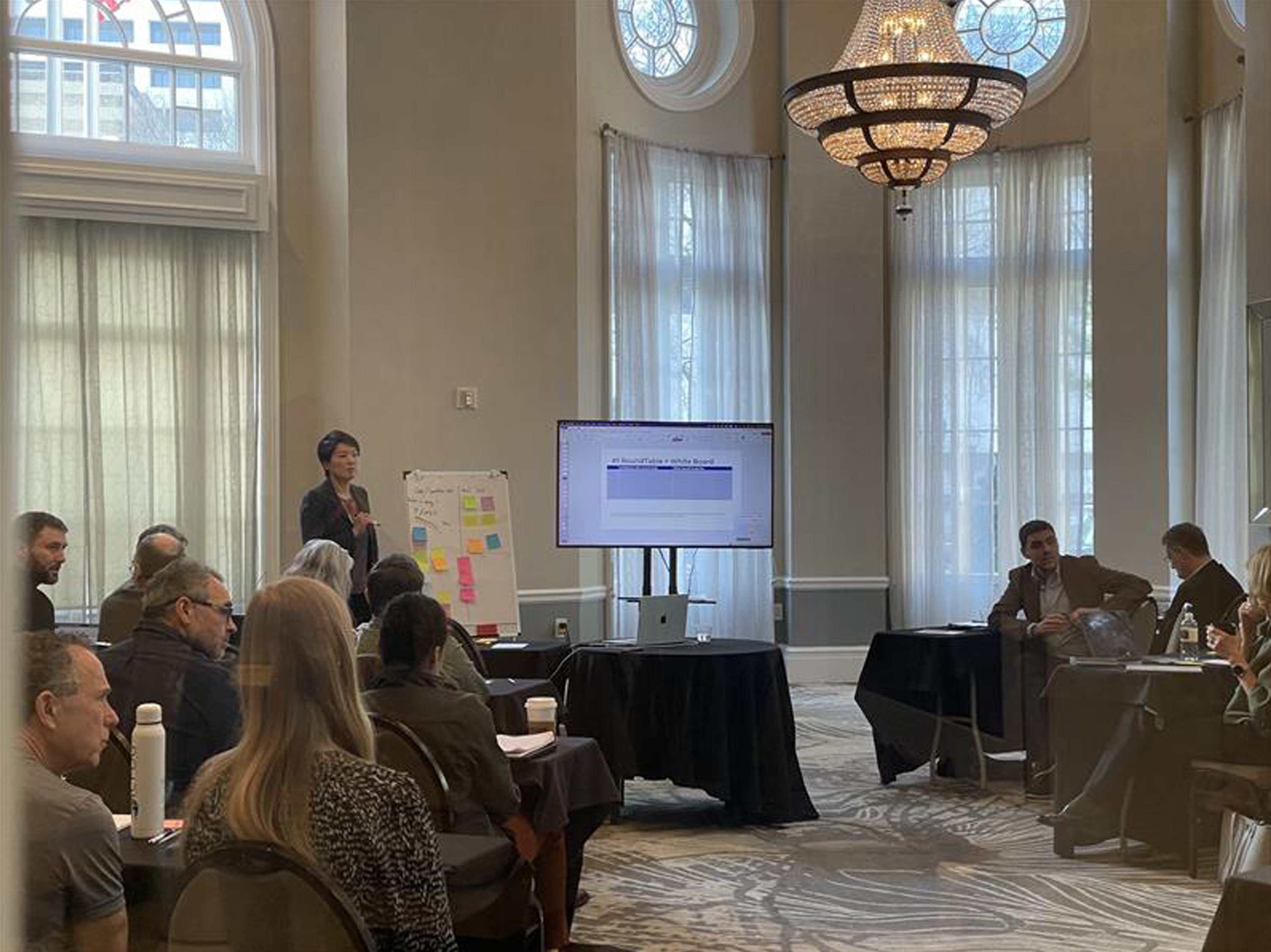
Join us for the Ametris Digital Data Summit 2027! Now in its fifth year, ADDS is heading to Atlanta once again to facilitate easier access and expanded space and support our growing community. ADDS is a one-of-a-kind scientific conference advancing the adoption of wearable digital health technologies (DHTs) in clinical research by bringing together a multidisciplinary group of digital health leaders for expert-led presentations and collaborative discussions.
Featured Speakers
-

Dana Wolff-Huges, PhD
Program Officer
National Cancer Institute
-

Raul Torres, PhD
Associate Director, Data Science
Takeda
-
Daniel Lachant
Associate Professor of Medicine
University of Rochester Medical Center
-
Jie Ren, PhD
Director, Data Science
Merck
-
Dr. Paul Hibbing, PhD
Assistant Professor
University of Illinois Chicago Department of Kinesiology and Nutrition
-

Dana Wolff-Huges, PhD
Program Officer
National Cancer Institute
-

Raul Torres, PhD
Associate Director, Data Science
Takeda
-

Daniel Lachant
Associate Professor of Medicine
University of Rochester Medical Center
-

Jie Ren, PhD
Director, Data Science
Merck
-

Dr. Paul Hibbing, PhD
Assistant Professor
University of Illinois Chicago Department of Kinesiology and Nutrition
Check back regularly for new speakers!
Why Attend ADDS 2027
ADDS is your chance to learn from, network with, and develop collaborations with colleagues from a variety of disciplines, including clinicians, data scientists, clinical trialists, digital health technology specialists, and public health researchers.
Client Case
Studies
Networking
Forums
Scientific Poster
Session
Panel
Discussions
Pre-Conference Workshop
Parkinson's Disease
Monday, February 8th
Clinical trials of disease-modifying therapies (DMTs) for Parkinson’s disease continue to rely heavily on the MDS-UPDRS Part III as a primary clinical endpoint, despite growing concern that conventional rating scales may lack the sensitivity needed to detect subtle treatment effects—particularly in early-stage populations where intervention may matter most. Against a backdrop of repeated challenges in PD DMT development, this workshop asks a central question for sponsors: are conventional clinical scales alone sufficient to evaluate disease modification?
The session will examine emerging evidence that digitally derived measures (DDMs) can capture PD progression with greater sensitivity than traditional rating scales, drawing on data from longitudinal at-home monitoring and composite measures derived from wearable sensors. Faculty will discuss how continuous measures of walking, non-walking behavior, motor fluctuation, and real-world activity may provide a richer and more responsive view of disease progression than periodic in-clinic assessment alone.
Through expert presentations, interactive roundtables, and moderated debate, participants will explore the scientific, operational, statistical, and regulatory considerations that will determine whether DDMs can be used confidently in PD DMT trials. Discussion will address effect-size and sample-size implications, patient compliance and remote data collection requirements, endpoint interpretability, and the level of evidence needed to support regulatory acceptance or formal qualification.
The workshop will conclude with a practical call to action for sponsors, researchers, regulators, and technology developers: to align on evidence standards, validation pathways, and collaborative studies that can move DDMs from promising exploratory tools to fit-for-purpose endpoints—helping accelerate PD DMT development and increasing the likelihood that trials can detect meaningful treatment effects.
Seats are limited! Please check the box on the ticket form to reserve your seat.
Scientific Poster Session
If you have original, unpublished research that involves the use of digital health technologies (DHTs), including wearables, sensors, and/or eCOA, we invite you to submit your abstract for consideration for ADDS 2027 Scientific Poster Session!
What Did Attendees Say About ADDS?
It's nice to have a conference that has a very specific focus, because we can dive much deeper into that and really get into the meat of the data. You can get into a much deeper understanding of the particular topic as well as some of the advancements in the field.
Ariel Dowling, PhD
Head of Sensing and Measurement | Takeda
It's a perfect thing when you can come to a conference, and you can meet people and immediately realize that you have things in common and can help each other; to meet other people who are really in different fields, but experiencing some of the same issues and develop potential collaborations across the board.
Johathan Soslow
Pediatric Cardiologist | Vanderbuilt University
An event like this brings talent that you normally are not exposed to, and as you see these presentations, you're shocked as to how much innovation is out there.
Peter Fernandes
CEO | Bellerophon Therapeutics
I think a lot of us do research in the technology and how we can apply it to our specific research interests or populations, but learning how to cross those boundaries between clinical populations is important.
Jennifer Schrack
Professor of Epidemiology and Medicine | Johns Hopkins Bloomberg School of Public Health